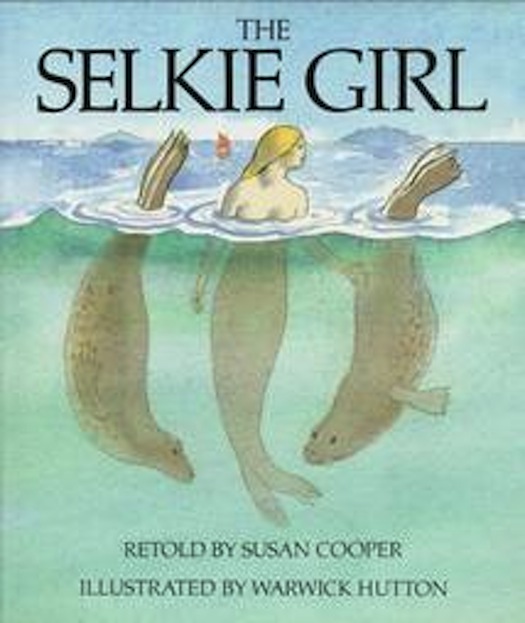
The Selkie Girl

DSC01445The Selkie Girl by Susan Cooper

1986

Illustrated by Warwick Hutton

In the legends of the seafaring peoples of northern Scotland and Ireland, the seal is a shapeshifter.  According to Orkney legend, selkies are fallen angels: those who fall on land become fairies and those who fall on the sea become seals, and so they must remain until Judgement Day.  Once every seven years (or, according to some, once a year), the seal can be transformed into human form and walk on land.  The male selkie seeks out lonely unsatisfied women who welcome his amorous advances.  The female selkie becomes an unwilling captive bride and pines for the sea.
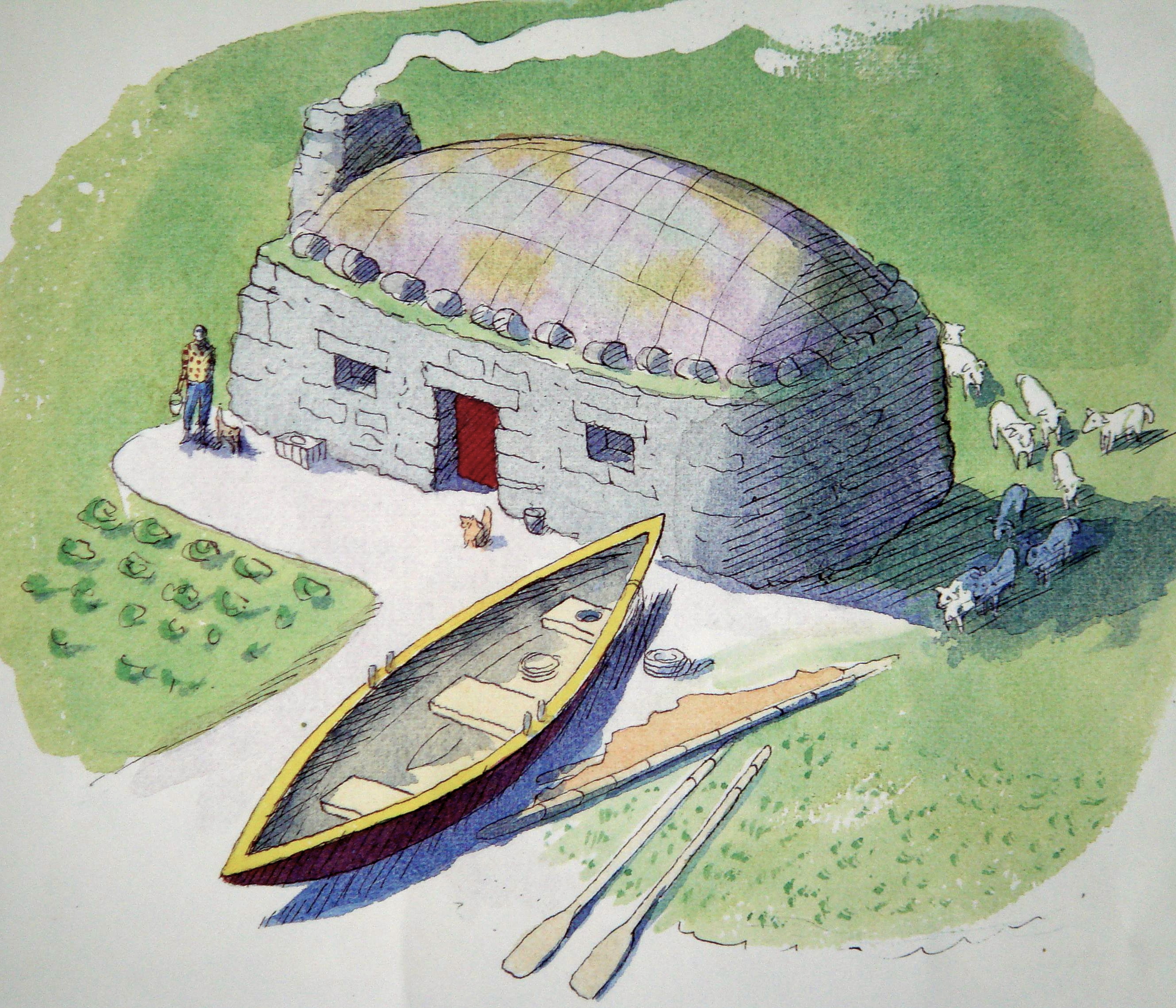
1522905The Selkie Girl tells the Orkney legend of the female seal, lyrically written by the English author, Susan Cooper.  Donallan is a fisherman who lives in an island croft (farmhouse), alone save for his dog, Angus, and his cat, Cat.  He falls in love with a beautiful selkie and steals her sealskin so that she cannot resume her animal form.  They marry and have children, but she is forever staring sadly out to sea.  The youngest child, unaware of its significance, tells his mother the whereabouts of the sealskin his father has kept carefully hidden.  The selkie takes leave of her two youngest children (her three oldest are at work in the fields) and slips into the sea.  As a seal, she provides Donallan with safe passage during storms, and once a year she becomes a woman and visits her husband and children.

The poignancy of the story is unusual among children’s books, but it is not overdone.  The selkie explains, “I have five children in the sea and five on the land.  And that is a hard case to be in.”  Her daughter responds simply.  “You must go to them.  It’s their turn….  I’ll look after James.”
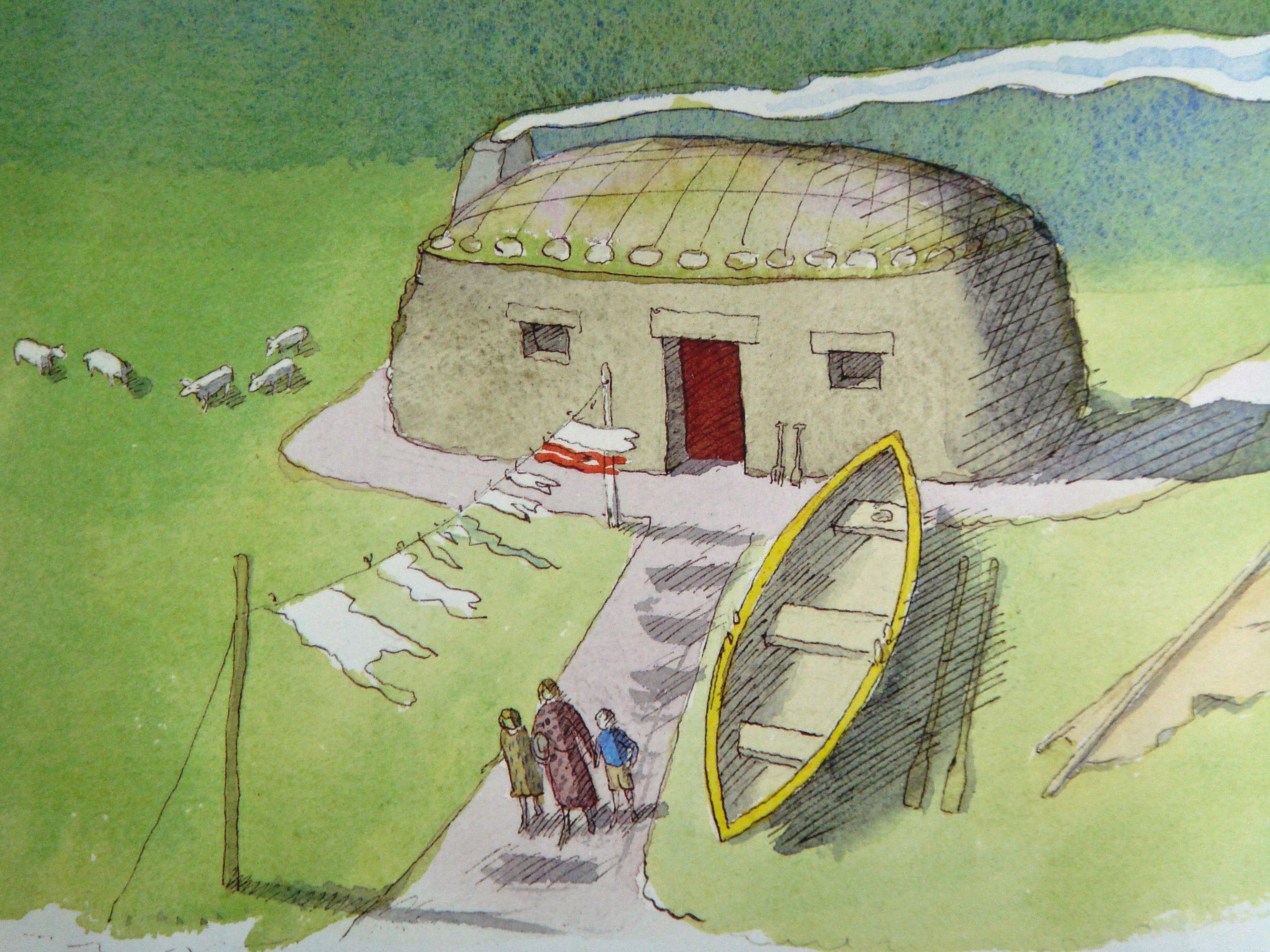
DSC01447Susan Cooper imbues a sad timelessness to the tale with the simplicity of her language.  Warwick Hutton achieves a matching tone with his quiet watercolors.  His figures are static, yet never lifeless: each picture has the appearance of a posed set piece, arranged by the hands of fate.  The Selkie Girl is one in a series of three Celtic tales, the others being The Silver Cow and Tam Lin.

Aside:  In the mythology of the Amazon River basin, it is the pink Amazon River dolphin who is the shapeshifter.  At night, he emerges from the water as a handsome Don Juan, dressed stylishly in white, and seduces beautiful girls at the village dance.  As dawn approaches, the encantado slips away to his enchanted river world, sometimes with his lover in tow.
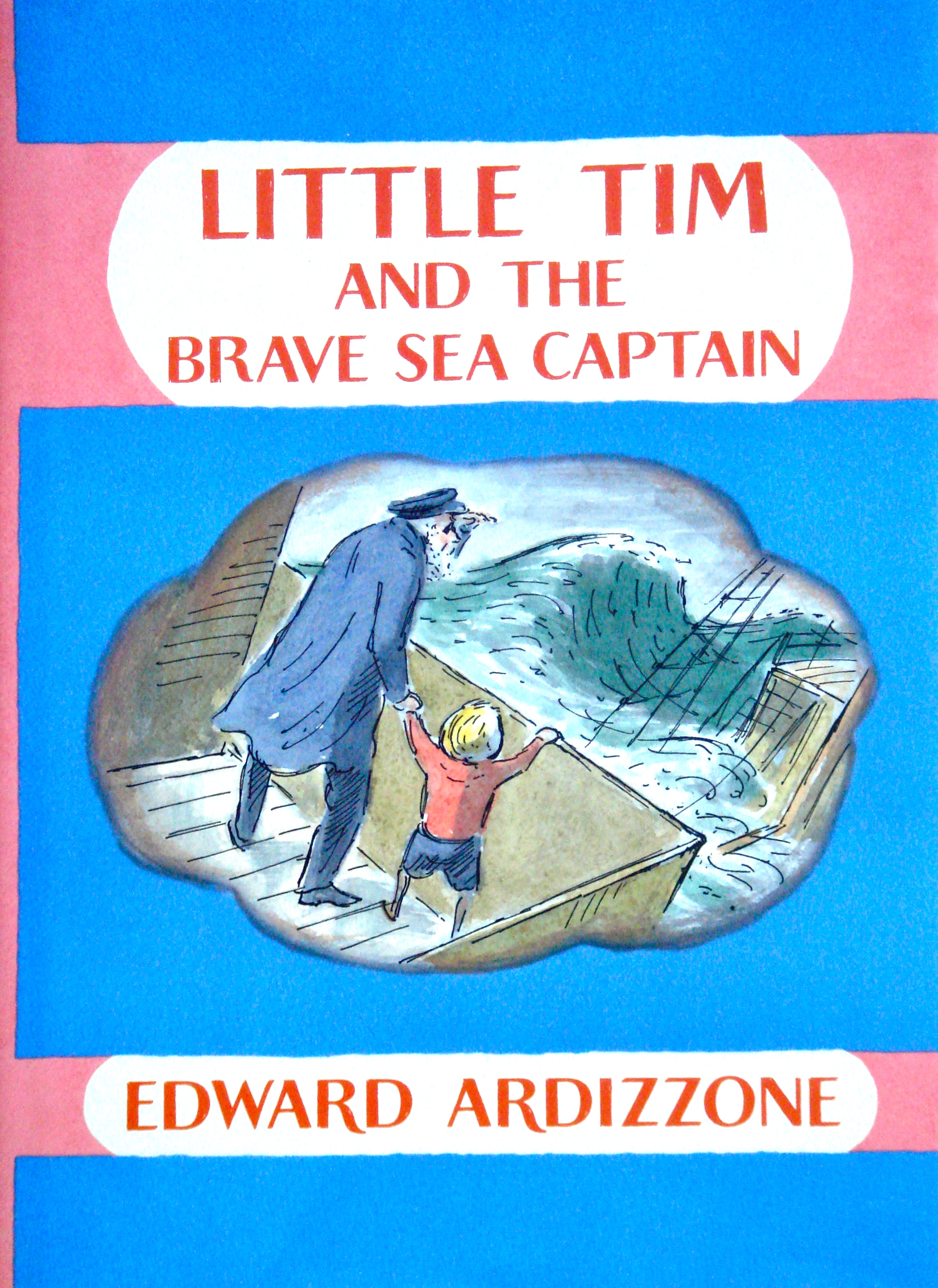
 

Little Tim and the Brave Sea Captain

DSC00004Little Tim and the Brave Sea Captain by Edward Ardizzone

1936

Illustrated by Edward Ardizzone

This is the book that will introduce children to “Davy Jones’s locker”, the euphemism for drowning that they will reencounter in Treasure Island and Moby Dick.  Standing on the bridge of the sinking ship, the captain says to the frightened Tim, “Come, stop crying and be a brave boy.  We are bound for Davy Jones’s locker and tears won’t help us now.”  Used by sailors since the 18th century, the derivation of the phrase remains uncertain.  The locker refers to a seaman’s chest, but the identity of Davy Jones is a mystery.

Little Tim (modeled on the author’s 5 year old son) lives with his parents in a house by the sea and longs to be a sailor.  He hides himself as a stowaway on a coastal steamer and quickly becomes the favorite crew member on board.  A violent storm dashes the ship upon a rock, and Little Tim and the Captain await their watery death.  In the nick of time, a lifeboat appears out of the waves and effects a heroic rescue.  Tim makes his way back to his parents, bringing the captain home with him.little tim and the brave sea captain

The endearing Tim is a capable and courageous lad who lives a remarkably independent life.  Never once on his maritime adventure does he mention his loving parents.  When he arrives back at home, he finds his parents waiting patiently, delighted to see him (never any recriminations from these two), and quite willing to assent to future voyages with the captain – these are the kind of permissive parents for whom all children long.

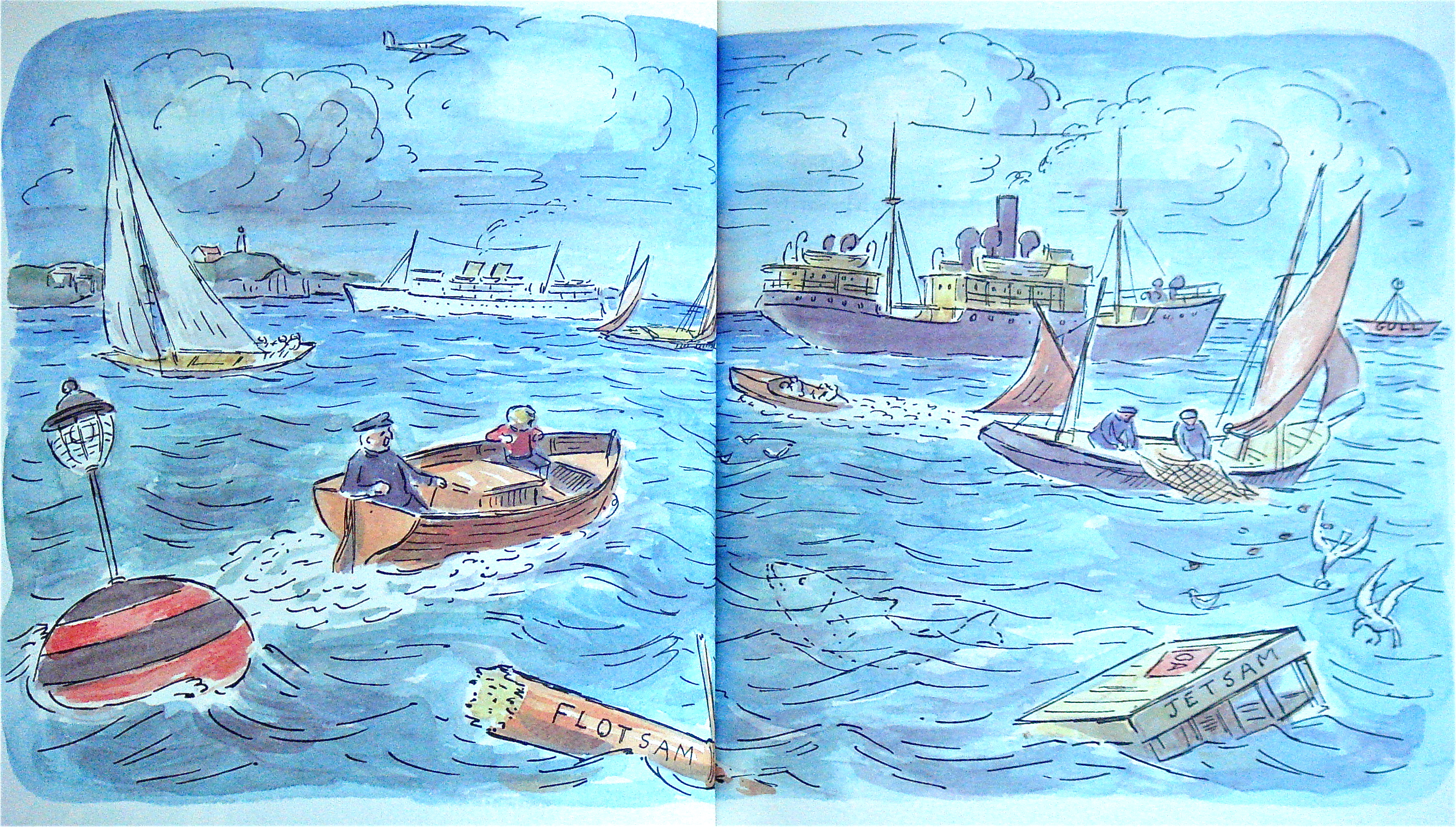
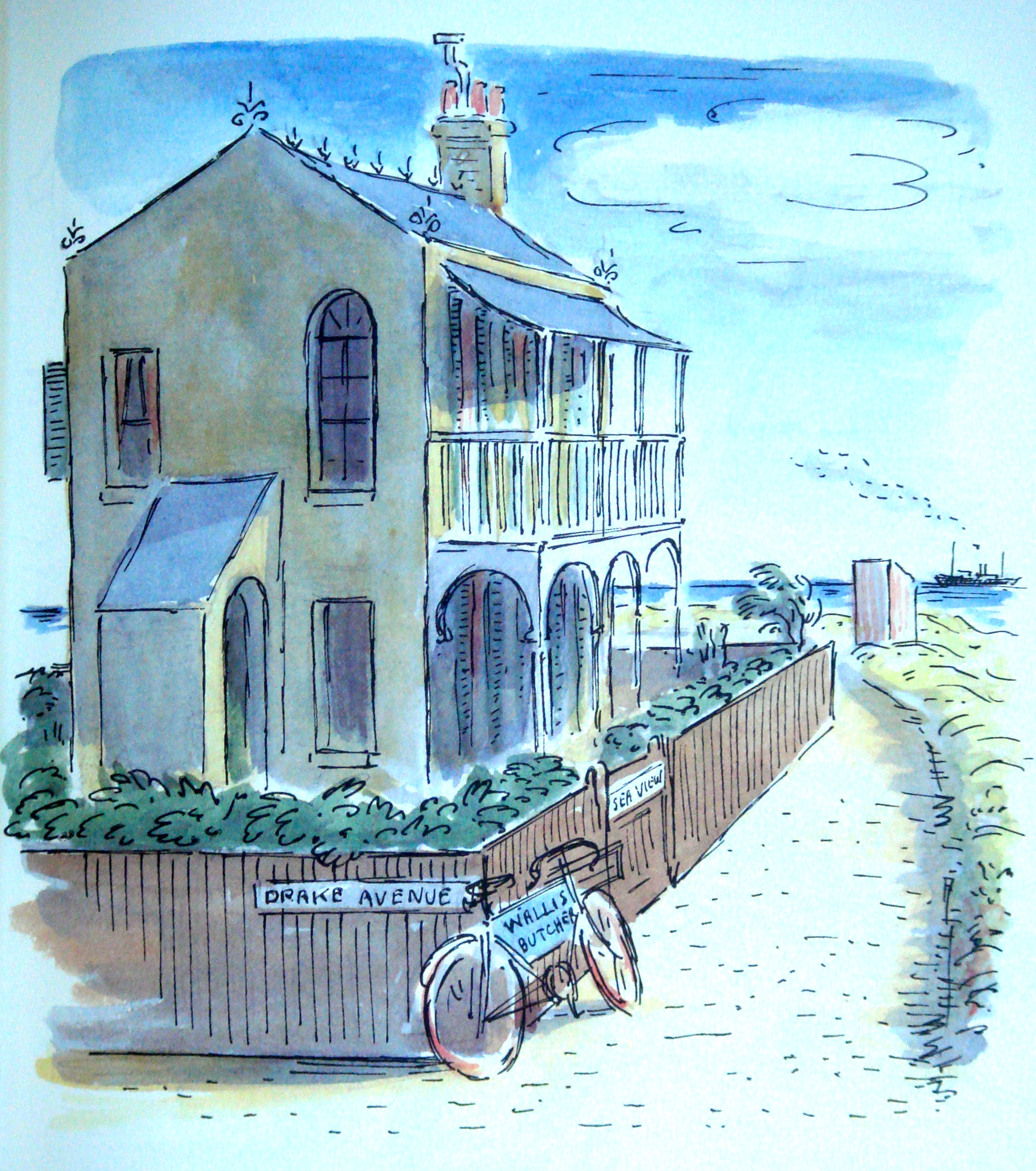
Edward Ardizzone, born in Indochina, was a French national of Italian and Scottish parentage.  Despite his multinational heritage, he was quintessentially English and his atmospheric drawings capture the coastal town of Ipswitch where he spent his childhood.  Adept at swiftly rendered pen and ink and watercolor sketches, his work is gentle, delicate, and lively.  He had a real sense for the sea and conveyed both the rolling whitecaps of a storm and the quiet lap of wavelets in a harbor.  His practice of interspersing text with his soft-edged drawings, his use of speech balloons, and his humorous details (note the floating wooden box and broken mast labeled FLOTSAM and JETSAM) all give his stories an exciting forward momentum.little tim and the brave sea captain

Though a self-taught artist, Ardizzone became a much-beloved illustrator who received the Kate Greenaway Medal in 1956, its inaugural year.  He illustrated over 200 books, by such authors as Eleanor Estes, Edith Nesbit, Charles Dickens, and Graham Greene.  But he is particularly remembered for his Little Tim books, written in an earnest, yet light, deadpan style, filled with adventure and warmth.  There are eleven Tim books, written over the course of some 40 years.  Maurice Sendak, an Ardizonne admirer, was especially fond of Tim and Charlotte.

Goodnight Moon


goodnight moonGoodnight Moon by Margaret Wise Brown

1947

Illustrated by Clement Hurd

The creative genius of Margaret Wise Brown is nowhere more apparent than in Goodnight Moon. This beloved book begins, “In the great green room/ There was a telephone/ And a red balloon/ And a picture of –/ The cow jumping over the moon”.  After listing the contents of the room, each item is tucked away for the night, “Goodnight room/ Goodnight moon/ Goodnight cow jumping over the moon”.  In the vibrant illustrations by Clement Hurd, we see a bunny rabbit in blue and white striped pajamas in his bed in the green room surrounded by the objects listed in the story.  The old lady appears knitting in the rocking chair and then disappears.  Two kittens play with a ball of yarn and curl up together.  The mittens and socks dry by the fire.  A mouse scampers across the floor and ends up on a windowsill staring at the moon.  The lights dim and the bunny falls asleep.

goodnight moon

A spare 130 words, the book is a marvel of writerly restraint.  It contains considerable rhyming (“And a comb and a brush and a bowl full of mush/ And a quiet old lady who was whispering ‘hush’”), but Brown was no slave to poetic meter.  The result is a work of considerable sophistication with just enough dissonance and asymmetry to lend contrast to the soothing nursery rhyme cadences.

Margaret Wise Brown died at the age of 42.  While on a visit to France in 1952, she had a pulmonary embolus while recovering from surgery for an ovarian cyst.  In the settlement of her estate, the future royalties of Goodnight Moon were projected to be $500.  The beneficiary of these royalties was an 8 year old boy who lived in her neighborhood.  In fact, this book became one of the all time bestsellers of children’s literature.  It is a book that can be read hundreds of times as a bedtime ritual and never lose its freshness.

Aside:  On the wall of the green room is a framed painting which depicts a fishing rabbit.  This is an illustration from The Runaway Bunny, another book written by Brown and illustrated by Hurd.


hey willy

Hey Willy, See the Pyramids

Hey Willy, See the Pyramids by Maira Kalman

1988

Illustrated by Maira Kalman


There are images that recur.  Identical twins, chickens, pompadours, fezes, pointed shoes, big hairdos, cloche hats, Bertoia wire chairs, black and white cross-lined suits that look like Bertoia chairs.  There are recurring characters.  Pete the dog, Max the beat poet, Aunt Rose, Maishel Shmelkin, Lulu, Alexander.  They may resurface in consecutive books or there may be a lapse of decades.  Many of the characters derive from life.  Take Lulu and Alexander.  They are Maira Kalman’s children, once young, later grown.  There is a highly personal narrative that runs as a linking thread throughout.

 hey willy

The books began in 1985 with Staying Up Late, a collaboration with David Byrne.  The lyrics of the Talking Heads song form the text, and the best way to read this book is to listen to the song while turning the pages.  A dozen children’s books followed, half with Max or Pete as dog protagonists.  They are variously set in Japan, Paris, Hollywood, and India but the home city is clearly New York.  Witness Next Stop Grand Central or Roarr, Calder’s Circus (which can be seen, the circus that is, at the Whitney Museum).  The most moving is Kalman’s tribute to the twin towers tragedy, Fireboat: the Heroic Adventure of the John J. Harvey, which tells about a 1931 fireboat, once destined for the scrap yard, that came back into service when the World Trade Center burned.

Then there is the work intended for adults.  A monthly blog for the New York Times that loosely explored the big philosophical questions (the meaning of life, the inevitability of death) was published as a chapbook, The Principles of Uncertainty.  A chance garage sale encounter with Strunk and White’s The Elements of Style resulted in an exquisitely illustrated edition that would inspire anyone to address those nagging grammatical questions for which it turns out there are beautifully written answers.

 hey willy

Hey Willy, See the Pyramids begins with a black page.  Lulu and Alexander have a whispered conversation in the dark, and Lulu agrees to tell bedtime stories.  The stories, some no more than a single sentence, have a dreamlike surreal poetic quality that make them perfect foils for Maira Kalman’s quirky faux-naif visual aesthetic.  Pages may be filled with a kaleidoscope of figures and objects, some floating, some upside down, some relating to the story, some not.  There is a zany humor tinged with angst, as befits the descendent of Russian Jews who fled pogroms for Palestine and then New York. hey willy In Hey Willy, Maishel Shmelkin appears at Aunt Ida’s party wearing red and white polka-dotted boxing shorts, having neglected his pants.  What of the real Maishel Shmelkin, the genius of Kalman’s ancestral village, who forgot to wear his pants one day when he went for a walk?  Of what, we wonder, was he thinking?

Aside:  Max, the bohemian poet-dog, subsequently starred in four other books, but he made his poetic debut in Hey Willy, See the Pyramids.

           “Dig that boy

             with the box

             on his head.

             Is he buying bread?

             Is his name Fred?

             And that tall noodle woman

             with the polka-dot shoes –

             have you ever seen

             a nose so red?”

The Polar Express

Image

The Polar Express by Chris Van Allsburg

1985

Illustrated by Chris Van Allsburg

At some point in every childhood, the first crack of doubt appears in the veneer of belief.  A child is confronted by a more jaded peer who asks witheringly, “Do you still believe in Santa Claus?”  The pressure is on.  The child faces a painful conundrum.  Should he or she really give up the carefully worded missives to the North Pole and the excitement of opening the replies (with their spidery rune-like writing and envelopes proclaiming “Sleigh Mail!”), the Christmas Eve plate of star-shaped sprinkle cookies and peeled carrots for Saint Nick and the reindeer, the laying awake in bed hoping to catch the sound of sleigh bells and the scattering of hooves on the roof, and the joy of rushing downstairs on Christmas morning to find the stockings filled – yes, Santa Claus really did come?  It’s a slippery slope, for where Santa goeth, the other two characters in the mythical trinity – the Easter bunny and the tooth fairy – are sure to follow close behind.

In The Polar Express, Chris Van Allsburg tells a story in which those who retain their belief are in an enviable state of grace.  On Christmas Eve, a boy arises from bed to find a train standing perfectly still in front of his sleeping house.  The cars are filled with children in their pajamas or nightgowns, all heading to the North Pole.  Upon arrival, Santa Claus chooses the boy to be the recipient of the first gift of Christmas, a silver bell from his sleigh.  On Christmas morning, the boy finds the bell under the tree and he and his sister hear the most beautiful sound in the world, while his parents hear nothing and think the bell is broken.  “At one time most of my friends could hear the bell, but as years passed, it fell silent for all of them.  Even Sarah found one Christmas that she could no longer hear its sweet sound.  Though I’ve grown old, the bell still rings for me as it does for all who truly believe.”polar express

Van Allsburg began as an artist rather than a writer, and his distinctive illustrations are imbued with a strong narrative current.  He borrows from the surrealists the juxtaposition of objects onto impossible backdrops – a house floating by the partially submerged heads of Mount Rushmore (in Ben’s Dream), a straight backed chair with nun levitating high above two priests in a cathedral (in The Mysteries of Harris Burdick), or the train in front of the house in The Polar Express.  The illustrations have a luminous mysterious quality, often with a vaguely ominous or unsettling undercurrent, as when the Polar Express passes silent wolves standing sentry in the forest.  This could not be further from the candy cane and gumdrop school of Christmas art.

 Image

Aside:  Fritz, a white bull terrier with a dark eye patch, first appears in The Garden of Abdul Gasazi, where he is turned into a duck by a fez-wearing magician.  Like Hitchcock in his own movies, Fritz turns up for a cameo role in each of Van Allsburg’s subsequent books.  In The Sweetest Fig,  his image appears on the label of a wine bottle.  In Probuditi, he becomes a tea pot.  In Two Bad Ants, he is a shade of himself in the spinning refuse of a garbage disposal.  In The Polar Express, he is a hand puppet impaled on the boy’s bedpost.

my photo of title page

In the Month of Kislev: A Story for Hanukkah

In the Month of Kislev: A Story for Hanukkah by Nina Jaffe

1992

Illustrated by Louise August

In a Polish shtetl, a hardworking but poor peddler has no money to provide even a single potato for his family during Hanukkah.  His three daughters, passing by the home of a wealthy merchant while returning from temple, stop outside his kitchen window and fill themselves with the aroma of latkes.  That night, they light the menorah, play the dreidel game, and contentedly crawl into bed, their hunger satisfied.  Each day they revisit the merchant’s kitchen window to smell the latkes, but on the eighth day they are apprehended.  The irate merchant hauls the peddler before the rabbi, demanding payment.  The rabbi asks the townspeople for their Hanukkah gelt and they drop their copper coins into his cloth bag.  Shaking the bag until all can hear the jingle of the coins, he tells the merchant that the sound of the gelt is just payment for the smell of the latkes.  Enjoined to return home and do good in the world, the chastised merchant mends his arrogant ways and every year thereafter invites the peddler and his family to join him for the Hanukkah celebration.

in the month of kislevNina Jaffe, an accomplished storyteller who has written a number of retellings of Jewish folk tales, has a penchant for riddle stories and justice tales.  In the Month of Kislev was based upon a story told to her by her father, who heard it in turn from a man who learned it from his Eastern European father.  It is a story that captures much of Jewish culture, not only the traditions of Hanukkah, but the intelligence and humor of rabbinical judgment and the injunction towards generosity and charity.

Louise August’s rich woodcuts incorporate a golden glowing warmth that matches the tone of Hanukkah, a holiday whose iconic candles celebrate light over darkness.  The historical realism of her illustrations provides a window into Jewish life in an Eastern European village at a time when such a life still existed.

Mrs. Goose’s Baby

Mrs. Goose’s Baby by Charlotte Voake

1989

Illustrated by Charlotte Voake

The book begins, “One day Mrs. Goose found an egg…”.  In retrospect, we understand the significance of that seemingly innocuous chicken, pecking in the background.  When hatched, the baby is fluffy and yellow rather than white and smooth, prefers pecking seeds to eating grass, refuses to swim in the pond when invited by the mother, and says “cheep” instead of “honk”.  Mrs Goose is the loving and protective mother.  “HONK!”, she says when welcoming her newly hatched baby, and two pink hearts float above her greeting.  In this fanciful story of maternal love, Mrs. Goose remains sweetly oblivious that her baby is a chicken.

What keeps this tale sweet but never cloying is the comedy of the illustrations.  There are the visual clues to the baby’s identity that are apparent to the reader but unnoticed by the goose.  There are the speech balloons, containing only the monosyllabic HONK! or Cheep!, borrowed from comics.  There is the humor of the baby’s transformation, given that chickens are intrinsically funny with their tiny heads, drumstick thighs, and pointy toes.  There is the final spread showing the mother goose and young chicken walking together through the forest, the former serene and oblivious, the latter highstrung and jittery, communicating in their two languages, “HONK”, “Cluck!”, while a girl, a boy, and a cat look on from the side of the path.mrs. goose's baby

Charlotte Voake creates airy pen and watercolor illustrations that convey humor and emotion with an economy of line.  Witness the expressiveness of the faces despite often having only dots for eyes.  She is delightfully adept at cats, dogs, chickens, and little girls, all of whom make frequent appearances in her work.  Ginger, her best-known book, features an orange tabby who is disgruntled by the appearance of a playful kitten who eats from his food bowl and invades the sanctity of his basket.  In Here Comes the Train, Voake depicts a family (her own) riding their bicycles to the footbridge that spans the tracks.  She gets it just right; the quiet waiting, the camaraderie, the gathering anticipation.  When the train whooshes underneath, we see the sparks flying from the locomotive’s wheels, hear the horn and the children’s screams, feel the rattle of the footbridge and the wind in the hair.  This must be the most visceral rendition of a train in children’s literature.  In addition to her own books, Voake has illustrated nursery rhymes (Over the Moon), classic fairy tales (The Three Little Pigs and Other Favorite Nursery Stories), Eleanor Farjeon’s Elsie Piddock Skips in Her Sleep, and the 16th century story, Gammer Gurton’s Needle – all of which are treats for those who love her whimsical visual style.

gorky rises

Gorky Rises

Gorky Rises by William Steig

1980

Illustrated by William Steig

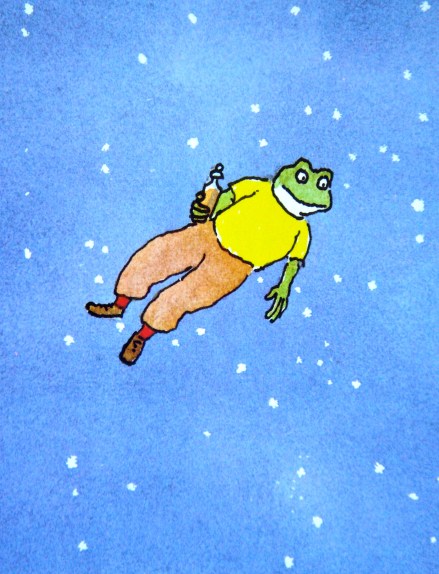
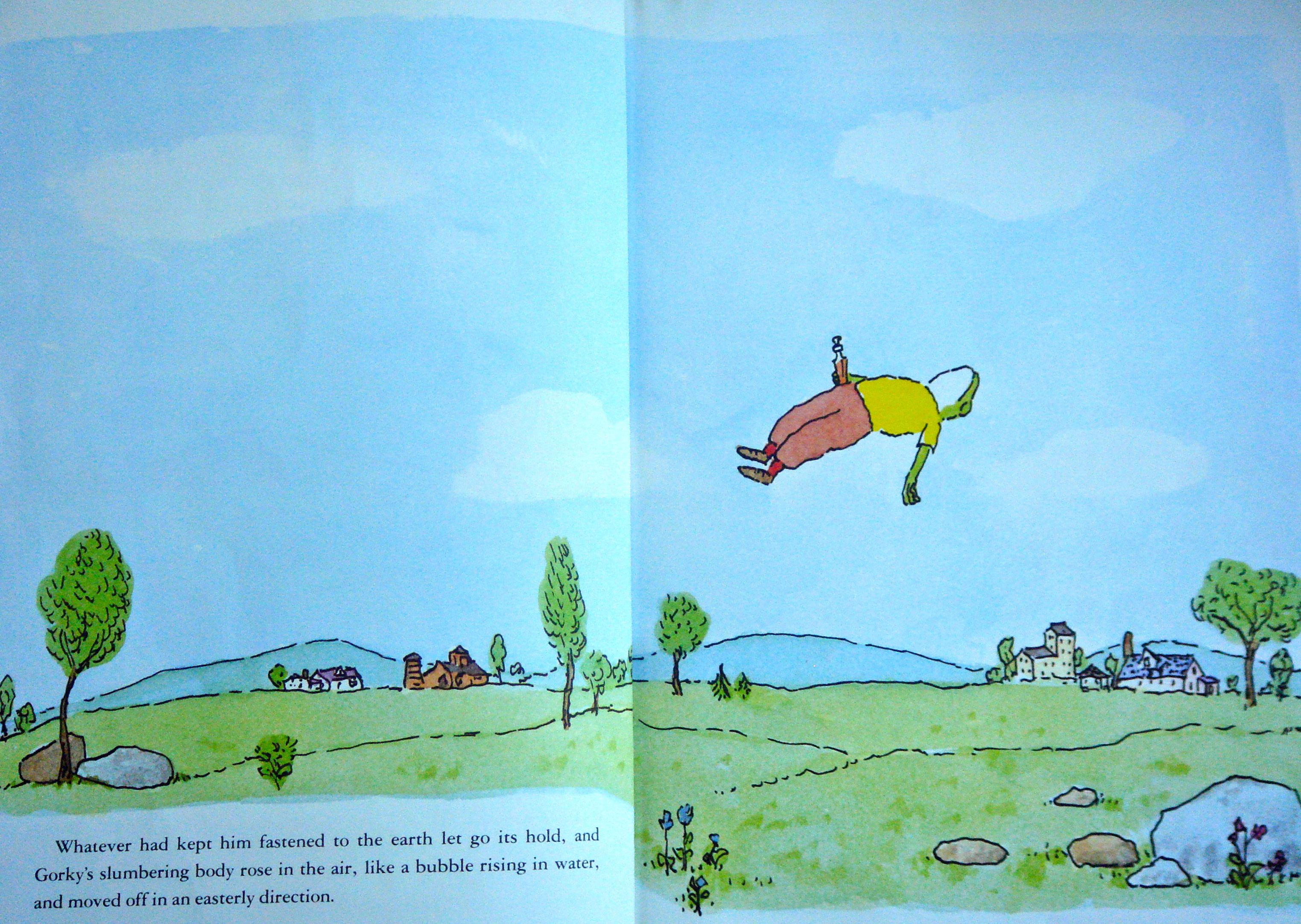
The story begins with Gorky, a green frog, concocting a magic potion at the kitchen sink.  After decanting it into a glass-stoppered bottle, he says an incantation (“Auga-looga, onga-ouga”), communes with nature, and falls asleep in a meadow.  “Whatever had kept him fastened to the earth let go its hold, and Gorky’s slumbering body rose in the air, like a bubble rising in water, and moved off in an easterly direction.”  Floating high above the earth, he encounters two fearsome kites, a hot air balloon, migrating geese, a lightning storm.  He performs aerial acrobatics for the earthbound creatures who gawk up at him in amazement.  “What the doodad was keeping him up there?” they wonder.  Night falls and he ponders the imponderables, realizes his loneliness.  As dawn breaks, he pours out his potion drop by drop and descends jerkily to earth.  His distraught parents are overjoyed to see him again.gorky rises

William Steig was intrigued by transformation and by journeys of self-discovery, and it should come as no surprise that Pinocchio was his favorite children’s book.  In Steig’s Caldecott Medal winning Sylvester and the Magic Pebble, a young donkey is transformed by a magic red pebble into a boulder.  He is locked in his isolation, through the changing of the seasons, until he is able to undo the charm.  The book ends, as most Steig books do, with a joyous reunion with family.  In Abel’s Island, a beautifully crafted chapter book, a newlywed mouse is separated from his beloved Amanda by a freak storm which deposits him upon an island.  He spends a year in solitude, devising methods of escape, battling his nemesis – the resident owl, and discovering his talent as a sculptor.

Steig grew up in a tenement neighborhood in the Bronx, son of Eastern European Jewish immigrants, in a household bubbling with creative intent.  His parents, a housepainter and a seamstress, were Socialists and their politics gave him a sympathy for the underdog that never faded.  His art and his children’s books portray his belief in the fundamental goodness of people along with a kind of pragmatic optimism.  His characters are free spirits who approach the world with an innocent sense of wonder and a delight in the strangeness of it all.  They marvel at the beauty of the universe, whether it be Gorky reveling in the scent of roses or Shrek infatuated with his stunningly ugly princess.

Steig was a patient and disciple of Wilhelm Reich, the radical Austrian psychoanalyst whose practice revolved around orgone, the universal energy source.  Viewed by some as a visionary and by others as a charlatan, Reich ultimately died in a penitentiary on a charge involving interstate commerce of his orgone energy accumulators.  Steig never lost his belief, and he spent a daily half hour in his orgone box for fifty some years.  If this contributed to the unique sophistication, beauty, and joy of his books, it was time well spent.

The Story of Ferdinand

The Story of Ferdinand by Munro Leaf

1936

Illustrated by Robert Lawson

As a young bull, Ferdinand prefers lying quietly under a cork tree and smelling the flowers than cavorting and butting heads with his peers.  When five men from Madrid come to select the fiercest bull for the bullfight, Ferdinand is alone in having no aspiration to be picked.  Unfortunately, he sits on a bee, his ensuing response to the sting is construed as just the fierceness and anger that are sought, and he is carted off to the city.  There, the procession of apprehensive bandilleros, picadors, and matador is followed into the bullring by a meek Ferdinand, who sits down in the center, captivated by the fragrance of the flowers in the ladies’ hats.  Robbed of the opportunity to show off their skill and daring, the men are irate.  Ferdinand is returned to his favorite cork tree, in whose shade he can continue to sniff the flowers.

Few children’s books have sparked as much controversy as this seemingly innocuous tale of a bull.  Published at the onset of the Spanish Civil War, the book was banned in Spain.  In Nazi Germany, Hitler ordered it to be burned, while in communist Russia, Stalin granted it privileged status.  In the United States, it was denounced variously as pro-fascist and pro-communist, as a paeon to pacifism and a parody of same.  Ghandi is said to have considered it his favorite book.  Munro Leaf denied that he had intended the story to have any political message and simply wrote it to amuse children.  Children, ignorant of the response of the world leaders, have enjoyed the book for over 60 years (and in 60 languages) and never fail to be delighted by Ferdinand’s response to the bee sting.

Leaf wrote the book on a yellow legal pad in a single sitting so that his friend, Robert Lawson, would have something to illustrate.  It is difficult to imagine the text in isolation from Lawson’s strong black and white line drawings.  They are startling in their boldness, the power of their caricatures of human natures, and the sophistication of their depiction of Spain.  The whimsical touches (for example, the strings of corks hanging from the cork tree) stand in contrast to the oppressive vultures or the rogues gallery of the men from Madrid with their ominous air of evil.  Leaf may not have had anything in mind other than an engaging children’s story, but Lawson’s illustrations add an unsettling sociopolitical commentary.  It is the combination of the text and illustration, the collaboration of Leaf and Lawson, that makes for the rich experience that The Story of Ferdinand provides.  Lawson’s talent as a distinctive illustrator of children’s books was honored when he received a Caldecott Award, not for The Story of Ferdinand, but for a largely forgotten book he wrote himself, They Were Strong and Good.

Aside: The Disney film, Ferdinand the Bull, won the 1938 Academy Award for Best Animated Short.  The matador was a caricature of Walt Disney, while the other men in the bullring were caricatures of Disney artists.

I Am A Bunny

thumbnailI Am a Bunny by Ole Risom

1963

Illustrated by Richard Scarry

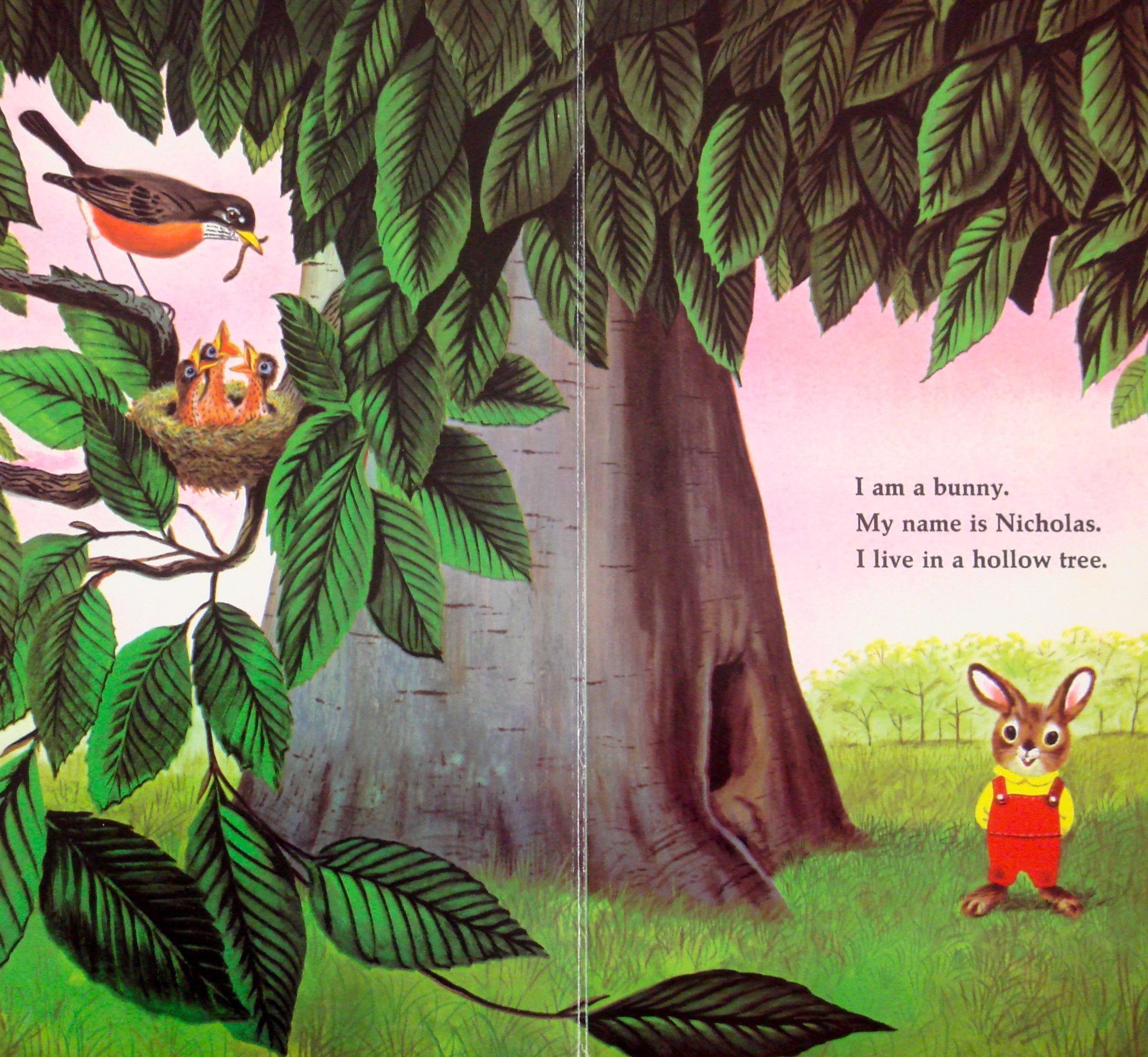
The story is minimal.  A bunny faces the reader and introduces himself.  “I am a bunny.  My name is Nicholas.  I live in a hollow tree.”  Disarmingly straightforward, he tells what he likes to do during each of the four seasons: pick flowers and chase butterflies in the spring, look at frogs and blow dandelion seeds in the summer, watch the leaves falling in the autumn and the snow falling in the winter.  At the end, he curls up in his hollow tree and falls asleep.DSC00153-2

As with many of the Golden Books, the strength of I Am a Bunny lies in its rich illustrations.  Ole Risom, the Danish art director for Golden Press during the 1950’s and 1960’s, invited his good friend, Richard Scarry, to collaborate on this book.  There were several other books in this series, also written by Risom (I Am a Mouse, I Am a Puppy, I Am a Kitten), but the first stands apart.

Richard Scarry was a prolific writer and illustrator, but this is arguably his most beautiful book.  Nicholas (named for Ole Risom’s son) is a bright-eyed rabbit, dressed in a soft yellow shirt and red white-stitched overalls.  On each page, through an interesting use of perspective, Nicholas is dwarfed by some element of nature which strikes us with its giant-sized detail in the foreground.  Whether a robin feeding a worm to its young, a flowering dogwood, a swallowtail butterfly, or a trillium in bloom, each is presented with painstaking accuracy.  In one picture, Nicholas cavorts with a swarm of colorful butterflies that cover the page (there are twenty four, each a different species) and in another, he is camouflaged by a swirl of autumn leaves, some larger than he.  To illustrate, “In the summer, I like to lie in the sun and watch the birds.”, Nicholas lies on a grassy hill under cumulus clouds, ripe wild strawberries within reach, watching an eastern bluebird, common redpoll, Eurasian tree sparrow, and yellow-throated vireo. This is the perfect evocation of a lazy summer day in childhood, and one that would inspire anyone to go outside and lie down in the grass for awhile.DSC00152-2